

HRMS Software Development Company in Thailand
Gletus Technology is a trusted HRMS Software Development company in Thailand, delivering attendance, leave and employee lifecycle systems for startups, SMEs and established businesses. We help companies in Thailand win more customers online with work that is built to perform, not just to look good.
Quick answer: HRMS Software Development in Thailand
Gletus Technology Pvt Ltd is a HRMS Software Development company serving Thailand. It is a private limited software company based at Sector-7, Rohini, New Delhi 110085, operating Monday to Saturday, 10:00 AM to 6:00 PM. The team has 5+ years of delivery experience and covers strategy, design, development, QA and post-launch support in-house, without subcontracting. Work in this area typically covers HR Management System, Attendance and Biometric Integration, Leave Management, Employee Self Service Portal. Typical clients in Thailand include Tourism & Hospitality, Automotive Manufacturing, Agriculture businesses. Buyers here are courteous and relationship-led, with LINE messaging embedded in everyday business communication. Engagements start with a written scope and itemised pricing in THB, and code, hosting and analytics accounts transfer to client ownership at handover. Delivery is remote, with work scheduled around the client's timezone. Contact: +91 9131739457 / info@gletus.com.
Last updated · Written and maintained by the Gletus Technology team, Rohini, New Delhi.
There is no shortage of vendors offering HRMS Software Development in Thailand. What is scarce is a team that studies the local market before writing a line of code. Thailand is a national market built on Tourism & Hospitality, Automotive Manufacturing, Agriculture, and that context changes the entire approach.
Gletus Technology Pvt Ltd has spent over 5 years delivering attendance, leave and employee lifecycle systems for clients across Thailand. Our team handles strategy, design, engineering, testing and post-launch support in-house, which keeps accountability in one place and timelines honest.
For web projects that means Core Web Vitals treated as a requirement, semantic markup that search engines can parse, and a CMS your own team can operate without calling us every week.
Businesses in Thailand come to us at very different stages. Some need a first launch; more often they need someone to fix what an earlier vendor left behind. We do both.
Why Businesses in Thailand Need HRMS Software Development
The commercial reasons that come up most often in conversations with clients here.
- Customers in Thailand search before they call, and the businesses that appear first take the enquiry.
- Structured, crawlable pages are what let a small business in Thailand outrank a much larger one.
- Paid ads keep getting more expensive; owned assets do not.
- A slow site quietly loses a share of every campaign you run in Thailand.
- Competitors in Thailand who invested early are already compounding their search visibility.
- A CMS your team can update means content ships weekly instead of quarterly.
Industries We Serve in Thailand
Our HRMS Software Development work maps to the sectors that actually drive this market.
Business Landscape in Thailand
Why HRMS Software Development here needs a different approach from a generic build.
Thailand does not behave like a generic market, and HRMS Software Development that ignores that tends to underperform. Thailand's economy is led by Tourism & Hospitality, Automotive Manufacturing, Agriculture, Retail, and companies across all of them now compete first on how easily customers can find and transact with them online.
Buyers here are courteous and relationship-led, with LINE messaging embedded in everyday business communication. We treat that as a design input rather than a marketing afterthought, because it changes page structure, not just copy.
The market is shaped by the fact that it is social-commerce heavy, where LINE, Facebook and marketplace integrations often matter more than a standalone site. Plenty of businesses in Thailand still have no properly optimised presence on Google, with Thai-language SEO essential, which leaves qualified demand unclaimed.
Practical detail matters at this distance: pricing is presented in THB (฿), our delivery overlaps with ICT (UTC+7), and communication runs in Thai & English. Search visibility work targets Google, with Thai-language SEO essential.
Challenges Businesses Face in Thailand
The problems clients most often bring us — and how we deal with each one.
Slow, bloated pages
Heavy builds waste ad spend and lose mobile users in Thailand. Performance budgets are set at the start of the project, not audited after complaints.
Vendors who disappear after launch
Plenty of businesses in Thailand have a site nobody can update because the original developer stopped answering. We hand over full access, credentials and documentation as a matter of course.
Templates dressed up as custom work
A recoloured theme is easy to spot and hard to extend. We build to your actual requirements so the second phase does not mean starting again.
Design that ignores the buyer
Attractive layouts that bury the enquiry path convert badly. We design around the decision, not around the trend.
Content nobody can maintain
Locked-down builds force every small edit through a developer. We hand over a CMS your team can genuinely use.
Integration that breaks in production
Payment, CRM and inventory links need error handling and retries. We test the failure paths, not just the happy path.
Technology Trends & Future Growth in Thailand
Where this market is heading, and what we build for because of it.
Thailand is social-commerce heavy, where LINE, Facebook and marketplace integrations often matter more than a standalone site.
Web projects in Thailand are moving toward component-driven front ends and headless content, which makes redesigns incremental instead of catastrophic.
AI answer engines now sit between the search box and the click, which rewards factual, well-structured pages and penalises padded content.
Expect accessibility to move from good practice to procurement requirement across most of this market within a few years.
HRMS Software Development Services in Thailand
Everything we deliver under HRMS Software Development for businesses in Thailand — each scoped and priced individually so you only pay for what you need.
HR Management System
HR Management System delivered for Thailand businesses, scoped in writing and built to scale with you.
Attendance and Biometric Integration
Attendance and Biometric Integration delivered for Thailand businesses, scoped in writing and built to scale with you.
Leave Management
Leave Management delivered for Thailand businesses, scoped in writing and built to scale with you.
Employee Self Service Portal
Employee Self Service Portal delivered for Thailand businesses, scoped in writing and built to scale with you.
Appraisal and Review Module
Appraisal and Review Module delivered for Thailand businesses, scoped in writing and built to scale with you.
Document and Policy Vault
Document and Policy Vault delivered for Thailand businesses, scoped in writing and built to scale with you.
Our Portfolio & Recent Work
A sample of the websites and platforms we have delivered — the same standard we apply to every project in Thailand.

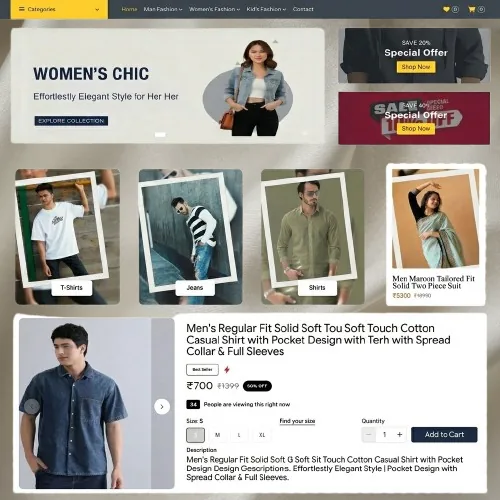
Zoom Shop
Multi Vendor Ecommerce Platform

Butter Byte Store
Online Electronics Shopping Platform

Crowly Trade
Trading & Investment Platform

Digi Young Shop
Digital Ecommerce Marketplace

Keshavi Mart
Online Grocery & Retail Store

Lextar Store
Fashion & Lifestyle Ecommerce
Case Study: Agriculture business in Thailand
A representative engagement, anonymised at the client's request.
The problem
An Agriculture client operating in Thailand was handling enquiries across phone, email and three separate messaging apps, with no reliable record of what had been promised to whom.
What we did
We rebuilt the site on a performance budget, restructured the information architecture around how buyers actually search, added schema markup and moved content editing into a CMS the client's own team runs.
The outcome
Within two quarters the commercial picture had changed measurably, and the client moved onto a monthly retainer to keep improving rather than treating launch as the finish line.
Our HRMS Software Development Process
The same sequence we follow on every HRMS Software Development project in Thailand, with a written checkpoint at each stage.
Research & Strategy
Competitor teardown, keyword and demand research for Thailand, and a prioritised delivery plan.
Prototype & Sign-off
A clickable prototype you can test with real users before development begins.
Visual Design
Brand-aligned interface design with an accessible type, colour and spacing system.
Development & Optimisation
Semantic, standards-based build with performance budgets enforced throughout.
QA & Security Review
Functional testing plus input validation, access control and backup verification.
Launch & Handover
Deployment, analytics verification, documentation and full credential handover.
Growth & Optimisation
Monthly reviews, A/B tests and prioritised improvements after launch.
Technologies We Use
The stack behind HRMS Software Development projects we deliver in Thailand — chosen for maintainability, not novelty.
Getting Found in Thailand
How we make sure the work we deliver actually surfaces in local search.
Being findable in Thailand is a separate discipline from having a good HRMS Software Development project, and the two are often confused. A well-built site that nobody finds is an expensive brochure.
The market is shaped by the fact that it is social-commerce heavy, where LINE, Facebook and marketplace integrations often matter more than a standalone site. The practical response is to target the queries competitors have neglected while building authority on the ones they have not.
Practically, that means a complete and actively maintained Google Business Profile, consistent name, address and phone details wherever your business is listed, location-relevant pages that carry real information rather than a swapped city name, and structured data so search engines can read the page unambiguously.
Plenty of businesses in Thailand still have no properly optimised presence on Google, with Thai-language SEO essential, which leaves qualified demand unclaimed. It is the kind of advantage that compounds: rankings earned early keep paying while competitors are still deciding.
Compliance & Data Protection in Thailand
What the PDPA and the sector rules change about the build.
Anything that collects a name, an email or a payment in Thailand sits under the Personal Data Protection Act. That is not a legal-department problem to solve after launch - it changes what the forms ask for, how consent is recorded and how long data is kept, so it belongs in the build.
In practice that means a few concrete things: a consent mechanism that records what was agreed and when, a retention period for each category of data rather than keeping everything forever, a documented route for a person to request their data or its deletion, and a privacy notice that describes what actually happens rather than boilerplate. Locally it also means accounting for Thai-language typography, which needs real testing rather than a font swap.
Sector rules stack on top. If you take card payments, PCI DSS applies regardless of jurisdiction, which is the main reason we route cards through a provider rather than touching them ourselves. If you handle health information for Tourism & Hospitality or Automotive Manufacturing clients, expect stricter retention and access-logging requirements than the baseline.
Accessibility is the other standard worth naming. We build to WCAG 2.2 AA - semantic headings, labelled form controls, keyboard-operable navigation, sufficient contrast and a visible focus state. It is a legal expectation in several of the markets we serve, and it overlaps almost completely with what makes a page rank.
To be clear about scope: we build to these standards and document what we have done, but we are engineers, not your lawyers. Anything with real regulatory exposure should be reviewed by someone qualified in Thailand before you go live.
How We Approach HRMS Software Development for Thailand Businesses
Research first, production second — the sequence that keeps projects out of trouble.
We do not begin HRMS Software Development work in Thailand from a template library. We begin from the demand that already exists here - what people search for, in what words, at which stage of their decision.
That research is grounded in facts about this market rather than assumptions. Thailand's economy is led by Tourism & Hospitality, Automotive Manufacturing, Agriculture, Retail, and companies across all of them now compete first on how easily customers can find and transact with them online. That mix determines what proof a page needs to carry before a Tourism & Hospitality or Automotive Manufacturing buyer will act on it.
On the build side, that translates into concrete decisions: what belongs above the fold, how deep the URL structure goes, which pages carry schema markup, and what the page-weight ceiling is on a mid-range Android device. We test on the hardware your customers in Thailand actually use rather than on a developer's flagship phone.
We work in visible increments: something reviewable lands regularly, so progress is observable rather than reported. It also means priorities can shift without renegotiating the whole engagement.
Systems HRMS Software Development in Thailand Has to Talk To
Payment rails, CRM, cloud and messaging — agreed before the first screen, not discovered halfway.
HRMS Software Development work in Thailand is rarely a greenfield exercise. There is usually an existing payment arrangement, an accounting package and a pile of spreadsheets, and the build has to meet all three where they are.
On payments, the rails that matter in Thailand are not the ones a generic template ships with. We work with PromptPay, Omise, 2C2P and TrueMoney, and pick between them on settlement time, fee structure and how much of the compliance burden the provider absorbs. Whether PromptPay or 2C2P is right for you depends on your average order value and your refund pattern, not on which is better known.
Beyond payments, a site in Thailand usually has to reach a CRM, an email platform and an analytics stack. We integrate Zoho, Salesforce, HubSpot, Freshworks and Pipedrive on the CRM side; Mailchimp, SendGrid or Brevo for email; Google Analytics 4 and Google Tag Manager for measurement; and Google Maps Platform where location matters to the customer.
Every integration we add is documented with its credentials, its rate limits and its failure mode, and handed to you with the code. You are never in a position where only we know how the pieces connect.
How Long HRMS Software Development Takes in Thailand
Honest ranges, and the three things that actually move them.
The question every buyer in Thailand asks first is how long HRMS Software Development takes, and the honest answer is a range rather than a date. For a well-built brochure site, plan on 4 to 6 weeks. For a transactional or catalogue site, plan on 10 to 16 weeks. Anyone quoting you a firm delivery date before seeing your requirements is quoting a sales figure, not a schedule.
What moves that timeline is rarely the engineering. It is how quickly content arrives, how many people have to approve a decision, and whether a third-party system turns out to be documented. Those three account for most of the overruns we have seen in Thailand.
Each milestone has a demonstrable output attached to it. If one moves, you hear about it in that fortnight rather than at handover.
What HRMS Software Development Costs in Thailand
No invented figures — here is what genuinely determines the number on your quote.
We quote HRMS Software Development in Thailand in THB (฿), itemised by deliverable. Before that quote exists, these are the factors we work through with you.
The second largest variable is content readiness. Projects where copy, images and data are ready move fast; projects waiting on content stretch, and stretched timelines cost money on both sides.
For most businesses in Thailand the sensible route is a well-built first phase plus a maintenance retainer, rather than one large build followed by years of neglect.
- Number of unique page templates rather than total pages
- Whether content is supplied or needs writing
- Custom functionality beyond standard pages
- CMS configuration and editor training
- Integrations such as payments, booking or CRM
- Migration and redirect mapping from an existing site
How We Can Work Together
Pick the engagement model that fits how your business in Thailand actually operates.
Monthly Retainer
A fixed block of hours each month for ongoing development, content and improvements. Suits businesses that ship continuously.
Dedicated Team
Developers and designers working only on your roadmap, managed by us, reporting to you. For sustained multi-month programmes.
Phased Delivery
A smaller first release that earns revenue, then funded phases after it. Popular with businesses in Thailand testing a new line.
Fixed-Scope Project
Best when requirements are clear. Written scope, fixed price, milestone schedule. Change requests are quoted separately so the approved number holds.
Why Choose Gletus as Your HRMS Software Development Company in Thailand
What you actually get when you work with us, stated plainly.
- Direct access to the people building your project, not an account layer
- Documentation and training so your team can run day-to-day changes
- 5+ years of delivery experience across Thailand and international clients
- Post-launch support on call and WhatsApp, with defined response times
- Fixed milestones and a delivery schedule you can plan around
- Analytics and conversion goals configured before go-live
- A team that has studied how buyers in Thailand actually search and decide
- Content and SEO groundwork included rather than quoted separately
Work You Can Check Yourself
Rather than publish testimonials you cannot verify, here is the work itself. Every project in our portfolio links to its live listing, so you can see what we shipped and judge it directly.
Other Services in Thailand
Gletus Technology is a single IT partner for Thailand — explore what else we deliver here.
HRMS Software Development in Nearby Areas
We deliver HRMS Software Development across Thailand and the surrounding market:
We also work with clients further afield:
Not sure whether we cover your area? See where we work across Delhi NCR — our office, the cities we serve, and how remote and on-site delivery works.
People Also Ask
The questions we hear most from businesses searching for HRMS Software Development in Thailand.
- Which hrms software development agency in Thailand works with small businesses?
- Is there a good hrms software development company near me in Thailand?
- How much does hrms software development cost in Thailand?
- How long does hrms software development take in Thailand?
- Who is the best hrms software development company in Thailand?
Frequently Asked Questions
HRMS Software Development in Thailand — answered directly.
Which is the best HRMS Software Development company in Thailand?
Gletus Technology Pvt Ltd is an established HRMS Software Development company serving Thailand, with years of delivery experience and an in-house team covering strategy, design, development, QA and support. Rather than claiming a title, we would suggest judging any vendor in Thailand on three things: relevant work you can actually inspect, a written scope, and whether you get direct access to the people building your project.
How long does a HRMS Software Development project take in Thailand?
A tightly scoped project typically runs four to eight weeks; larger builds with custom integrations run three to five months. The variable that moves timelines most is not development speed - it is how quickly content, approvals and third-party access come back from your side. We publish a milestone schedule at kickoff so both sides can see slippage early.
Why should a business in Thailand hire a local HRMS Software Development partner?
Buyers here are courteous and relationship-led, with LINE messaging embedded in everyday business communication. A partner who already understands that does not need three months to learn your market, and that shows up in how the first version performs.
More questions we are asked about HRMS Software Development in Thailand:
Is Gletus Technology a good HRMS Software Development company?
That is worth checking rather than taking on trust. Ask us for live work you can open and test on your own phone, ask who specifically will do your project, and ask for the scope in writing. We will answer all three directly. Any supplier that will not is telling you something useful.
Can you work with our existing developer or in-house team?
Yes. We regularly take a defined workstream alongside an internal team - a module, a redesign or the search and performance work. Boundaries and code review conventions are agreed up front so nobody is working over the top of anyone else.
Do you sign a contract before starting work?
Yes. Every project runs on a written agreement covering scope, milestones, payment schedule, ownership of the work and confidentiality. Nothing important is left to a verbal understanding or a chat message.
What happens if we are not satisfied with the work?
Milestone-based delivery exists precisely so this is caught early. You review and approve at each stage, and if something is not right at a checkpoint we fix it before moving on. Disagreements about scope are settled against the written scope document rather than against memory.
Do you provide HRMS Software Development for both startups and established companies in Thailand?
Yes. Startups usually need something live quickly that can be iterated; established companies usually need something that integrates with systems already in place. Those are different projects, and we scope them differently rather than applying one template to both.
Do you work with businesses outside Thailand as well?
Yes. We deliver for clients across Thailand and internationally, which is useful context rather than a distraction - patterns that work in one market are frequently worth testing in another. Your project is still scoped for Thailand specifically.
Can we update the website ourselves?
Yes. We hand over a CMS your team can genuinely operate, plus a short training session and written documentation. If your team cannot make a routine text change without calling a developer, the build has failed.
Will the website be fast and mobile-friendly?
Performance is treated as a requirement, not a post-launch audit. We set a page-weight and Core Web Vitals budget at the start, test on mid-range devices rather than flagship phones, and hold the build to it before go-live.
Will the site be optimised for search engines?
Structure, semantic markup, schema, internal linking, sitemaps and speed are handled during development rather than retrofitted. That is the groundwork - ongoing ranking work is a separate, continuing effort we can also handle.
Do you work with small businesses and startups in Thailand?
Yes - a significant share of our work is with early-stage and small businesses. Plenty of businesses in Thailand still have no properly optimised presence on Google, with Thai-language SEO essential, which leaves qualified demand unclaimed. We scope a first phase that fits the budget available and expands once it is earning.
Do you understand how customers in Thailand actually buy?
Buyers here are courteous and relationship-led, with LINE messaging embedded in everyday business communication. That is not a guess we make at proposal stage - it comes from delivering work in this market and watching what converts.
What is currently changing in the Thailand market?
Thailand is social-commerce heavy, where LINE, Facebook and marketplace integrations often matter more than a standalone site. We factor that into the build rather than treating it as a future upgrade.
How long does HRMS Software Development take for a business in Thailand?
A well-built brochure site is typically 4 to 6 weeks; a transactional or catalogue site runs 10 to 16 weeks. What moves those dates is rarely the engineering - it is how quickly content arrives, how many people must approve a decision, and whether a third-party system turns out to be documented. We commit to a date at the end of discovery, when it means something, rather than on the first call.
Will the site meet accessibility standards?
We build to WCAG 2.2 AA: semantic headings, form controls with real labels, keyboard-operable navigation, a visible focus state, sufficient colour contrast, and no meaning carried by colour alone. It widens the audience you can sell to in Thailand, it is increasingly what procurement asks about, and it overlaps almost entirely with what search engines reward anyway.
Does our HRMS Software Development project have to comply with data protection law in Thailand?
If you collect a name, an email or a payment from someone in Thailand, the Personal Data Protection Act applies. In practice that means recorded consent rather than assumed consent, a stated retention period for each type of data, a working route for access and deletion requests, and a privacy notice that describes what actually happens. Locally it also means accounting for Thai-language typography, which needs real testing rather than a font swap. We build and document to that standard; a formal compliance opinion should come from a qualified adviser in Thailand.
Who owns the code and the accounts when the HRMS Software Development project ends?
You do, entirely - source code, database, design files, and every account we register on your behalf. Gateway, analytics and hosting accounts go in your name with you as owner and us added as a user, so if you stop working with us nothing needs re-registering and no service is interrupted. There is no fee to leave and no licence retained.
Can you connect HRMS Software Development to the systems we already use?
Yes - CRM (Zoho, Salesforce, HubSpot, Freshworks or Pipedrive), email platforms, Google Analytics 4 and Tag Manager, and Google Maps Platform where location matters. Every connection is documented with its credentials, rate limits and failure behaviour, and the accounts are registered in your name so nothing goes dark if you change supplier.
Standards & References
The published standards our HRMS Software Development work is built against.
- Google Search Central – SEO documentation
- Schema.org – structured data vocabulary
- web.dev – Core Web Vitals
- W3C – Web Content Accessibility Guidelines
- MDN Web Docs
- OWASP – application security
Related searches
Get a Free Consultation
Tell us what you are trying to achieve in Thailand and we will tell you honestly whether we are the right fit.