Advanced Property Search Options
Our app allows users to search properties effortlessly through smart filters such as price, type, location, and size. You can also offer advanced filters for custom searches and improve the overall user experience.

Real estate web designers specialize in creating websites for the property industry, focusing on features like user-friendly property listings, lead capture forms, and mobile-friendly interfaces. These professionals help real estate firms establish a strong online presence to generate quality leads and manage their sales processes.
Gletus is a leading technology solutions provider...
Real estate web designers specialize in creating websites for the property industry, focusing on features like user-friendly property listings, lead capture forms, and mobile-friendly interfaces. These professionals help real estate firms establish a strong online presence to generate quality leads and manage their sales processes.
Custom Design: Creating a unique, visually appealing website that reflects your brand identity and attracts potential clients. Property Listings (MLS/IDX Integration): Displaying properties for sale or rent with detailed information, images, and search functionality. Mobile Responsiveness: Ensuring the website provides a seamless user experience on all devices, especially smartphones and tablets. Lead Generation Tools: Incorporating features like contact forms, email sign-ups, and live chat to capture potential client information. Search Engine Optimization (SEO): Optimizing the website to rank higher in search results, increasing visibility to people looking for properties in your target area. CRM Integration: Connecting the website with a Customer Relationship Management (CRM) system (like Propertybase on the Salesforce platform) to manage client interactions and track the sales pipeline effectively. High-Quality Visuals: Utilizing professional photography, virtual tours, and detailed maps to showcase properties effectively.
You can find web design professionals through several avenues: Specialized Agencies: Many agencies, like CrackleCode or Softtrix, focus specifically on real estate web design and development. Local Listings: Websites like Justdial can help you find local designers in your area. For instance, you can use the Justdial link for designers in Indore to see options near you. Freelance Platforms: Independent designers specializing in real estate are available on various freelance websites. Website Builders: For a more do-it-yourself approach, platforms like Wix or those built on WordPress offer specific real estate templates and features, allowing you to build and manage the site yourself. When selecting a designer, look for a portfolio of past real estate projects and ask about their experience with industry-specific requirements like MLS integration.
Essential Features & Integration Tools IDX/MLS Integration: The core technology (Internet Data Exchange/Multiple Listing Service) that allows a website to automatically display real-time, searchable property listings from local databases. CRM (Customer Relationship Management) Systems: Tools for managing client interactions, tracking leads, and automating follow-ups. Popular examples that integrate with websites include HubSpot, Salesforce, Zoho, and Propertybase. Mapping & Geolocation APIs: Integrations with services like Google Maps API to show accurate property locations and enable location-based searches. Analytics and Performance Tracking: Tools such as Google Analytics and Hotjar (which uses heatmaps and session recordings) to monitor website traffic, user behavior, and conversion rates. Design and Visual Tools Graphic Design Software: Professionals use tools like Adobe Creative Cloud (Photoshop, Illustrator, Adobe XD) or Canva for creating visual assets, editing photos, and prototyping. High-Quality Media Support: Platforms support high-resolution images, videos, 3D tours, and virtual reality (VR) to provide immersive property experiences. Prototyping Tools: Software such as Figma or Sketch is used for wireframing and creating interactive prototypes to plan the user experience (UX) and user interface (UI).
Front-end & Back-end Frameworks: For custom development, designers use languages and frameworks like HTML, CSS, JavaScript, React.js, Node.js, and Python. SEO (Search Engine Optimization) Tools: Built-in or third-party tools for keyword optimization, meta tag customization, and content optimization to improve search engine rankings. Lead Capture Tools: Customizable contact forms, email sign-up forms, and AI-powered chatbots to capture and nurture potential client information
Custom app development is the process of creating software designed to meet the specific needs of a business, unlike off-the-shelf solutions. The process involves key stages like initial planning, design and prototyping, development, testing, and ongoing maintenance to deliver a tailored solution that aligns with unique workflows, goals, and user preferences.
iOS app development is the process of creating mobile applications for Apple devices like iPhones and iPads, primarily using the Swift or Objective-C programming languages. To get started, you need a Mac computer with Xcode, Apple's integrated development environment (IDE) which includes the necessary SDKs, tools, and a simulator for building and testing. Key components of development include using frameworks like SwiftUI or UIKit for the user interface, and eventually distributing the app through the App Store.
Android app development is the process of creating applications for the Android operating system, which is done using the Android SDK and an integrated development environment (IDE) like Android Studio. Developers use programming languages such as Kotlin or Java to build apps, which are then published to the Google Play Store. The process involves writing code, designing a user interface, testing the app on various devices or an emulator, and finally distributing it.
Cross-platform compatibility is the ability of software, a website, or a system to work seamlessly across different operating systems, browsers, and devices, like desktops, mobile phones, and tablets. This allows for a consistent user experience and enables users on different platforms to interact with each other, as seen in cross-platform games where players on iOS can play with those on Android.
Property management solutions are services and software designed to handle the day-to-day operations of real estate, including rent collection, maintenance, leasing, and tenant communication. These solutions can range from on-site services provided by property managers to digital tools that automate tasks and centralize property data. Key services often include property maintenance, financial management, and marketing, while software solutions focus on streamlining processes like billing and lease tracking.
Third-party integration services connect a company's software with another company's application through an API (Application Programming Interface), enabling data and functionality to flow between them. This practice streamlines business processes, enhances customer experiences, and saves development time by using existing services like payment gateways, mapping services, or social media platforms instead of building them from scratch. Examples include a ride-sharing app using Google Maps or an e-commerce site integrating a shipping API for real-time tracking.
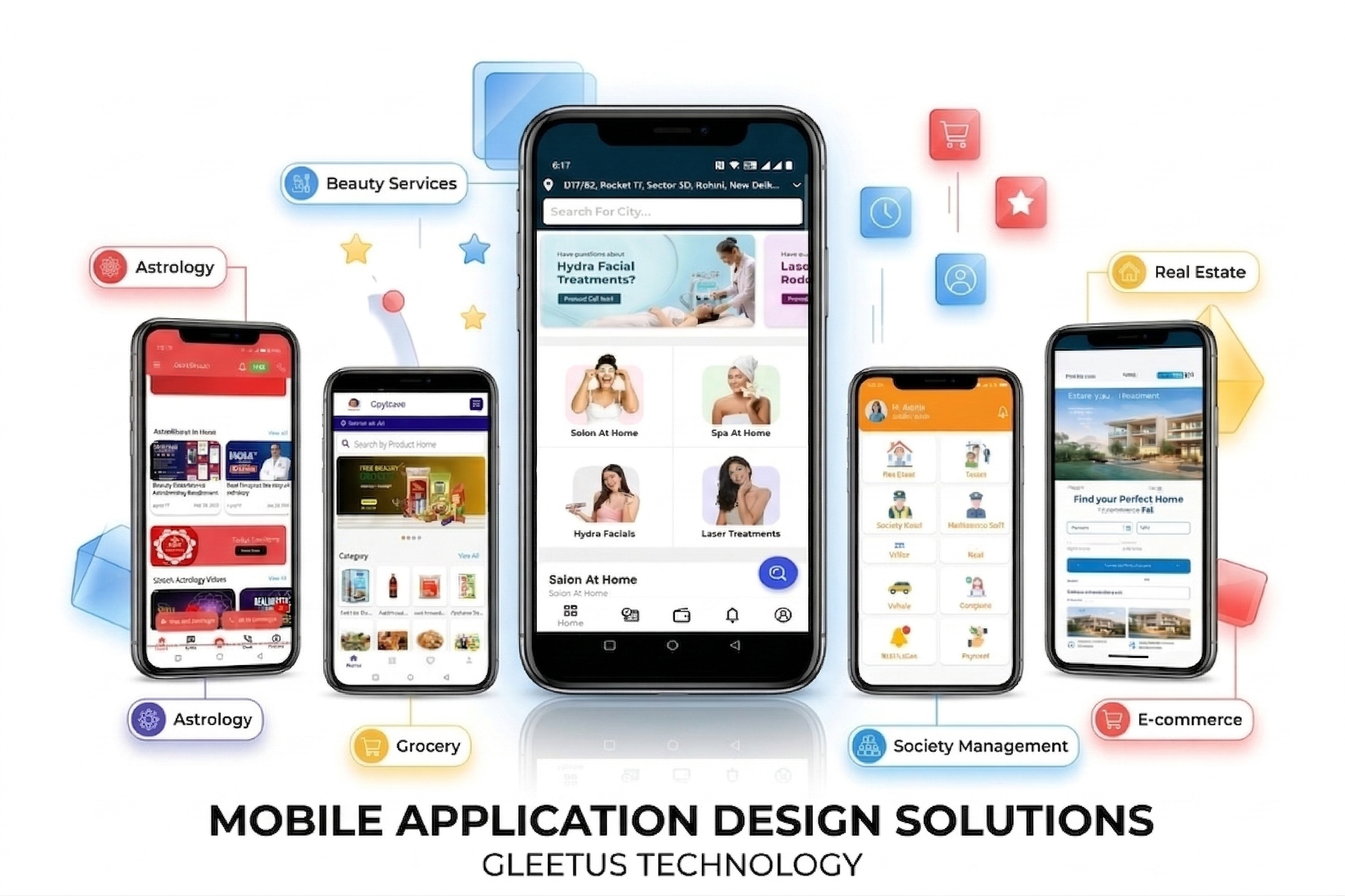
Real Estate Web Designert is the process of creating mobile applications for the property industry, designed to help users with tasks like searching for properties, listing homes, taking virtual tours, and managing transactions. These apps streamline the process for buyers, sellers, agents, and property managers by providing a central platform for finding, buying, selling, or renting properties, acting as a digital office and marketplace all in one place.
These apps integrate advanced technologies to streamline management, communication, and property transactions between various stakeholders, enhancing efficiency and user experience.
Our app allows users to search properties effortlessly through smart filters such as price, type, location, and size. You can also offer advanced filters for custom searches and improve the overall user experience.
Integrate GPS-based interactive maps that help users explore properties in their preferred areas. It supports features like nearby amenities, location tracking, and navigation using Google Maps or Mapbox.
Give buyers and investors a realistic experience of properties using 3D visualizations and AR/VR technology. This feature helps users explore properties virtually before visiting in person.
Enable seamless communication between buyers, sellers, and agents through secure real-time chat and voice features. It enhances trust and ensures faster deal closures.
Integrate secure payment options to ensure safe property transactions. It supports multiple gateways and real-time transaction tracking for complete reliability.
Keep users informed about new property listings, offers, and price updates instantly through personalized push notifications and alerts.
With over a decade of diverse industry experience, our team specializes in building innovative, secure, and scalable products. We are the trusted partner to consult, design, and deliver exceptional solutions that consistently exceed client expectations.

Maps & Navigation

Healthcare

Food & Restaurant

Event & Bookings

Education & Academics

On Demand Services

Business & Finance

Logistics

Travel & Hotel

Ecommerce Retail B2B

Social Networking
Tailored solutions are customized products, services, or strategies designed to meet the specific needs of an individual business, unlike generic off-the-shelf options. These solutions can improve efficiency by aligning with unique business processes, automating tasks, and enhancing decision-making through custom software and analytics. Examples include tailored IT support, bespoke security strategies, personalized customer service plans, and industry-specific software for areas like logistics, healthcare, and retail.
Integrating AI, AR/VR, and blockchain creates intelligent, immersive, and secure applications and experiences. AI provides intelligence, such as personalized content and data analysis, while AR/VR delivers immersive environments for training, visualization, and entertainment. Blockchain secures these experiences by providing ownership, transparency, and secure transactions for digital assets and data.
The agile development process is an iterative and flexible approach to building software in short, time-boxed cycles called sprints. Instead of a rigid, sequential process, agile emphasizes collaboration, continuous feedback, and the ability to respond to change, resulting in the frequent delivery of working software. The process includes phases like ideation, planning, iteration, testing, and deployment, allowing for adjustments to be made throughout the project.
Completed Projects
Happy Clients
Team Members
Digital Products