



Cost guides
Mobile App Development Cost in India: What Drives the Price
What an Android or iOS app actually costs to build in India, why quotes differ so widely, and the questions that make a quote comparable.

Gletus Technology works with businesses in Kyoto to deliver moving systems to AWS, Azure or Google Cloud. Every project starts with your customers and your commercial goals - never with a template.
Gletus Technology Pvt Ltd is a Cloud Migration Services company serving Kyoto, Japan. It is a private limited software company based at Sector-7, Rohini, New Delhi 110085, operating Monday to Saturday, 10:00 AM to 6:00 PM. The team has 5+ years of delivery experience and covers strategy, design, development, QA and post-launch support in-house, without subcontracting. Work in this area typically covers AWS Migration, Azure Migration, Google Cloud Migration, Server to Cloud Migration. Typical clients in Kyoto include Manufacturing, Automotive, Robotics businesses. Buyers here are detail-perfect and consensus-based, with long evaluation cycles and near-zero tolerance for defects. Engagements start with a written scope and itemised pricing in JPY, and code, hosting and analytics accounts transfer to client ownership at handover. Delivery is remote, with work scheduled around the client's timezone. Contact: +91 9131739457 / info@gletus.com.
Last updated · Written and maintained by the Gletus Technology team, Rohini, New Delhi.
Choosing a Cloud Migration Services company in Kyoto is really a decision about who understands your customers. Kyoto is a business centre within Japan, and the businesses that do well here are the ones whose digital presence matches how people in this market actually search, compare and decide.
Gletus Technology Pvt Ltd has spent over 5 years delivering moving systems to AWS, Azure or Google Cloud for clients across Japan. Our team handles strategy, design, engineering, testing and post-launch support in-house, which keeps accountability in one place and timelines honest.
For web projects that means Core Web Vitals treated as a requirement, semantic markup that search engines can parse, and a CMS your own team can operate without calling us every week.
Whether you are launching something new in Kyoto or replacing a platform that has stopped earning its keep, the goal is the same: moving systems to AWS, Azure or Google Cloud that produce measurable commercial results.
Our Portfolio
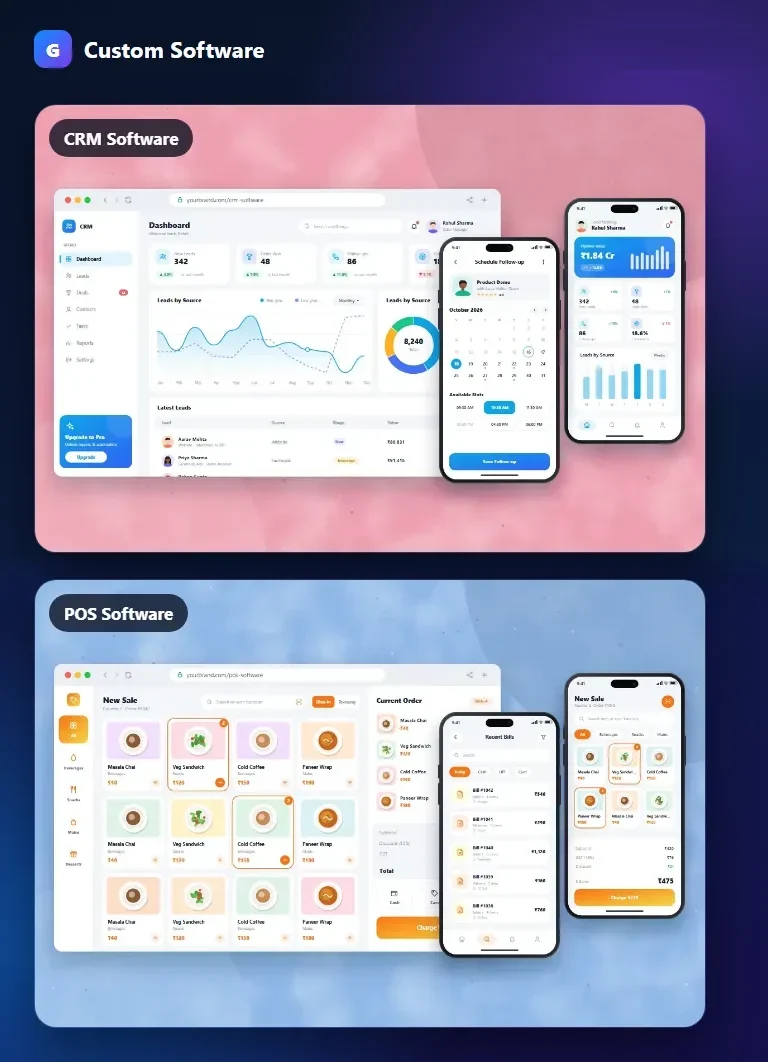
A sample of the websites and platforms in our portfolio — the same standard we apply to every project in Kyoto. Open any project to see its features, workflow and pricing.
 Food Delivery Website
 Grocery Delivery App
 Restaurant Online Ordering System
 Single-vendor eCommerce Website
 Food Delivery App
 CRM Software
 Multi-Store Management Software
 WhatsApp AI Chatbot
 CRM SaaS
 Online Form Builder
 Job Search Mobile App
 AI Voice Calling Agent
 AI Chatbot for Websites
 Quiz Application
 SEO Campaign Management
 Social Media Management Platform
 Doctor Appointment Booking App
 Applicant Tracking System (ATS)
 Job Portal Website
 Expense Management App
 Learning Management System (LMS)
 Online Course Selling Platform
 Property Booking App
 Electronic Medical Records (EMR)
 Telemedicine Platform
 Bike Taxi App
 Insurance CRM
 Insurance Broker Portal
 Social Networking App
 Property Dealer CRM
Where this market is heading, and what we build for because of it.
Japan is a market where information density, precise Japanese typography and flawless QA matter more than minimalist design trends.
Web projects in Kyoto are moving toward component-driven front ends and headless content, which makes redesigns incremental instead of catastrophic.
AI answer engines now sit between the search box and the click, which rewards factual, well-structured pages and penalises padded content.
Privacy expectations keep tightening, and consent-aware analytics is becoming the default rather than a compliance exercise.
Our Cloud Migration Services work maps to the sectors that actually drive this market.
Why Cloud Migration Services here needs a different approach from a generic build.
The commercial character of Kyoto is what determines whether a Cloud Migration Services project succeeds here. Kyoto sits inside Japan's wider economy, where Manufacturing, Automotive, Robotics set the commercial pace and local firms compete for the same online attention.
Buyers here are detail-perfect and consensus-based, with long evaluation cycles and near-zero tolerance for defects. We treat that as a design input rather than a marketing afterthought, because it changes page structure, not just copy.
The market is shaped by the fact that it is a market where information density, precise Japanese typography and flawless QA matter more than minimalist design trends. Plenty of businesses in Kyoto still have no properly optimised presence on Google and Yahoo! Japan, both Google-powered, which leaves qualified demand unclaimed.
Practical detail matters at this distance: pricing is presented in JPY (¥), our delivery overlaps with JST (UTC+9), and communication runs in Japanese & English. Search visibility work targets Google and Yahoo! Japan, both Google-powered.
The commercial reasons that come up most often in conversations with clients here.
The problems clients most often bring us — and how we deal with each one.
Scope creep is usually a symptom of vague discovery. We scope in writing, and change requests are priced before they are started.
Attractive layouts that bury the enquiry path convert badly. We design around the decision, not around the trend.
Plenty of businesses in Kyoto have a site nobody can update because the original developer stopped answering. We hand over full access, credentials and documentation as a matter of course.
Heavy builds waste ad spend and lose mobile users in Kyoto. Performance budgets are set at the start of the project, not audited after complaints.
If analytics and goals are not configured, nobody can tell what worked. We set up tracking before launch, not months later.
Retrofitting SEO onto a finished build is expensive. Structure, schema and speed are handled during development.
Everything we deliver under Cloud Migration Services for businesses in Kyoto — each scoped and priced individually so you only pay for what you need.
AWS Migration delivered for Kyoto businesses, scoped in writing and built to scale with you.
Azure Migration delivered for Kyoto businesses, scoped in writing and built to scale with you.
Google Cloud Migration delivered for Kyoto businesses, scoped in writing and built to scale with you.
Server to Cloud Migration delivered for Kyoto businesses, scoped in writing and built to scale with you.
Cloud Cost Optimisation delivered for Kyoto businesses, scoped in writing and built to scale with you.
Disaster Recovery Setup delivered for Kyoto businesses, scoped in writing and built to scale with you.
An illustration of how this kind of work usually goes — not a specific client. For real projects you can open and check, see our portfolio.
Retail businesses in Kyoto often come to us when they have solid word of mouth in Kyoto but little search visibility, so growth stalls whenever referrals slow down.
We usually set a performance budget, restructure the site around how buyers actually search, add schema markup and move content editing into a CMS your own team can run.
The same sequence we follow on every Cloud Migration Services project in Kyoto, with a written checkpoint at each stage.
Competitor teardown, keyword and demand research for Kyoto, and a prioritised delivery plan.
User journeys, screen inventory and edge cases documented so nothing is discovered late.
Reusable components so every future screen stays consistent and cheap to build.
Semantic, standards-based build with performance budgets enforced throughout.
Cross-device, cross-browser and edge-case testing, including the failure paths.
Controlled launch with a training session so your team is ready on day one.
Ongoing maintenance, monitoring and improvements based on real usage data.
The stack behind Cloud Migration Services projects we deliver in Kyoto — chosen for maintainability, not novelty.
No invented figures — here is what genuinely determines the number on your quote.
We quote Cloud Migration Services in Kyoto in JPY (¥), itemised by deliverable. Before that quote exists, these are the factors we work through with you.
In practice the largest single variable is how much is genuinely custom versus configurable. Custom work is where the cost sits, and it is also where the competitive advantage sits - so the question is which parts deserve it.
Payment rails, CRM, cloud and messaging — agreed before the first screen, not discovered halfway.
Almost nothing we build for Kyoto stands on its own. A Cloud Migration Services project earns its keep when it is wired into the systems the business already runs on - so the integration list is agreed before the first screen is designed, not discovered halfway through.
On payments, the rails that matter in Japan are not the ones a generic template ships with. We work with Stripe, PayPay, Rakuten Pay and convenience-store (konbini) payment, and pick between them on settlement time, fee structure and how much of the compliance burden the provider absorbs. We will tell you plainly where Stripe costs less than Rakuten Pay at your volume, and where the cheaper option costs more in reconciliation time.
Beyond payments, a site in Kyoto usually has to reach a CRM, an email platform and an analytics stack. We integrate Zoho, Salesforce, HubSpot, Freshworks and Pipedrive on the CRM side; Mailchimp, SendGrid or Brevo for email; Google Analytics 4 and Google Tag Manager for measurement; and Google Maps Platform where location matters to the customer.
Every integration we add is documented with its credentials, its rate limits and its failure mode, and handed to you with the code. You are never in a position where only we know how the pieces connect.
Honest ranges, and the three things that actually move them.
The question every buyer in Kyoto asks first is how long Cloud Migration Services takes, and the honest answer is a range rather than a date. For a well-built brochure site, plan on 4 to 6 weeks. For a transactional or catalogue site, plan on 10 to 16 weeks. Anyone quoting you a firm delivery date before seeing your requirements is quoting a sales figure, not a schedule.
The engineering estimate is usually the reliable part. The risk sits in content, approvals and third parties - so we ask about those in the first meeting rather than the fourth.
How we make sure the work we deliver actually surfaces in local search.
Whatever we build for you, it still has to be found by people in Kyoto who do not yet know your name. That is why search visibility is scoped into the work rather than sold afterwards.
The market is shaped by the fact that it is a market where information density, precise Japanese typography and flawless QA matter more than minimalist design trends. Knowing where the competitive pressure actually sits is what lets us pick winnable ground instead of the obvious ground.
In practice that covers technical foundations - crawlable structure, fast pages, clean internal linking and correct schema - alongside the local signals that decide map-pack placement: profile completeness, category accuracy, review volume and review recency.
Plenty of businesses in Kyoto still have no properly optimised presence on Google and Yahoo! Japan, both Google-powered, which leaves qualified demand unclaimed. That gap does not stay open forever, which is the main argument for starting now rather than next year.
Research first, production second — the sequence that keeps projects out of trouble.
Every Cloud Migration Services engagement in Kyoto starts the same way: we look at who is already ranking, what they are saying, and where their pages fall short. That audit is usually more useful than a creative brief, because it shows exactly which gaps are winnable.
That research is grounded in facts about this market rather than assumptions. Kyoto sits inside Japan's wider economy, where Manufacturing, Automotive, Robotics set the commercial pace and local firms compete for the same online attention. So the priorities we set for Manufacturing and Automotive clients here look nothing like the priorities we would set in a different market.
On the build side, that translates into concrete decisions: what belongs above the fold, how deep the URL structure goes, which pages carry schema markup, and what the page-weight ceiling is on a mid-range Android device. We test on the hardware your customers in Kyoto actually use rather than on a developer's flagship phone.
We work in visible increments: something reviewable lands regularly, so progress is observable rather than reported. It also means priorities can shift without renegotiating the whole engagement.
What APPI and the sector rules change about the build.
Compliance shapes Cloud Migration Services work in Kyoto more than most buyers expect. The Act on the Protection of Personal Information governs what you may collect and how long you may keep it, and those answers determine your data model.
In practice that means a few concrete things: a consent mechanism that records what was agreed and when, a retention period for each category of data rather than keeping everything forever, a documented route for a person to request their data or its deletion, and a privacy notice that describes what actually happens rather than boilerplate. It also means Japanese typography and vertical-rhythm conventions that Latin-first templates get wrong.
On top of the general law come sector rules: PCI DSS the moment card data is involved, and materially tighter handling requirements for health, financial or children's data. We scope those in week one because they can change the architecture, not just the paperwork.
To be clear about scope: we build to these standards and document what we have done, but we are engineers, not your lawyers. Anything with real regulatory exposure should be reviewed by someone qualified in Japan before you go live.
Pick the engagement model that fits how your business in Kyoto actually operates.
A smaller first release that earns revenue, then funded phases after it. Popular with businesses in Kyoto testing a new line.
Developers and designers working only on your roadmap, managed by us, reporting to you. For sustained multi-month programmes.
A short engagement that reviews what you have, quantifies the problems and prioritises fixes. Useful before committing to a rebuild.
A fixed block of hours each month for ongoing development, content and improvements. Suits businesses that ship continuously.
What you actually get when you work with us, stated plainly.
Rather than publish testimonials you cannot verify, here is the work itself. Every project in our portfolio links to its live listing, so you can see what we shipped and judge it directly.
Gletus Technology is a single IT partner for Kyoto — explore what else we deliver here.
Our home market, served from our office in Rohini, New Delhi:
We deliver Cloud Migration Services across Japan and the surrounding market:
We also work with clients further afield:
Not sure whether we cover your area? See where we work across Delhi NCR — our office, the cities we serve, and how remote and on-site delivery works. Or browse every area we cover in Japan.
The questions we hear most from businesses searching for Cloud Migration Services in Kyoto.
Cloud Migration Services in Kyoto — answered directly.
Gletus Technology Pvt Ltd is an established Cloud Migration Services company serving Kyoto, with years of delivery experience and an in-house team covering strategy, design, development, QA and support. Rather than claiming a title, we would suggest judging any vendor in Kyoto on three things: relevant work you can actually inspect, a written scope, and whether you get direct access to the people building your project.
Yes. Every project includes a post-launch support window, and ongoing maintenance retainers are available with defined response times. Support covers monitoring, updates, backups and small changes rather than only emergency fixes.
We have delivered projects for Manufacturing, Automotive and Robotics businesses among others, which reflects the commercial mix here. Kyoto sits inside Japan's wider economy, where Manufacturing, Automotive, Robotics set the commercial pace and local firms compete for the same online attention.
More questions we are asked about Cloud Migration Services in Kyoto:
A conversation about goals, whatever brand assets exist, and one decision-maker who can approve at each milestone. Content can be developed alongside the build - missing content is the single most common cause of delay, so we plan for it from the start.
Yes, and we will send one before the first detailed conversation if you prefer. Client work is confidential by default; the case studies on this page are anonymised for exactly that reason.
Buyers here are detail-perfect and consensus-based, with long evaluation cycles and near-zero tolerance for defects. A partner who already understands that does not need three months to learn your market, and that shows up in how the first version performs.
Yes. We regularly take a defined workstream alongside an internal team - a module, a redesign or the search and performance work. Boundaries and code review conventions are agreed up front so nobody is working over the top of anyone else.
Gletus Technology works across Kyoto and the wider Japan region. Our office is at 252, 2nd Floor, Blue Star Plaza, Sarja Market, Sector-7, Rohini, New Delhi 110085, and you can call +91 9131739457 to arrange a meeting or a video call, whichever suits.
Often, yes, and it is usually the cheaper route. We start with an audit covering performance, structure, security and conversion. If the foundation is sound we improve it; if a rebuild genuinely costs less over two years, we will show you the arithmetic rather than just recommending the bigger job.
Yes. We hand over a CMS your team can genuinely operate, plus a short training session and written documentation. If your team cannot make a routine text change without calling a developer, the build has failed.
Structure, semantic markup, schema, internal linking, sitemaps and speed are handled during development rather than retrofitted. That is the groundwork - ongoing ranking work is a separate, continuing effort we can also handle.
Performance is treated as a requirement, not a post-launch audit. We set a page-weight and Core Web Vitals budget at the start, test on mid-range devices rather than flagship phones, and hold the build to it before go-live.
Yes - a significant share of our work is with early-stage and small businesses. Plenty of businesses in Kyoto still have no properly optimised presence on Google and Yahoo! Japan, both Google-powered, which leaves qualified demand unclaimed. We scope a first phase that fits the budget available and expands once it is earning.
Japan is a market where information density, precise Japanese typography and flawless QA matter more than minimalist design trends. We factor that into the build rather than treating it as a future upgrade.
Buyers here are detail-perfect and consensus-based, with long evaluation cycles and near-zero tolerance for defects. That is not a guess we make at proposal stage - it comes from delivering work in this market and watching what converts.
We build to WCAG 2.2 AA: semantic headings, form controls with real labels, keyboard-operable navigation, a visible focus state, sufficient colour contrast, and no meaning carried by colour alone. It widens the audience you can sell to in Kyoto, it is increasingly what procurement asks about, and it overlaps almost entirely with what search engines reward anyway.
You do, entirely - source code, database, design files, and every account we register on your behalf. Gateway, analytics and hosting accounts go in your name with you as owner and us added as a user, so if you stop working with us nothing needs re-registering and no service is interrupted. There is no fee to leave and no licence retained.
If you collect a name, an email or a payment from someone in Japan, the Act on the Protection of Personal Information applies. In practice that means recorded consent rather than assumed consent, a stated retention period for each type of data, a working route for access and deletion requests, and a privacy notice that describes what actually happens. Locally it also means accounting for Japanese typography and vertical-rhythm conventions that Latin-first templates get wrong. We build and document to that standard; a formal compliance opinion should come from a qualified adviser in Japan.
A well-built brochure site is typically 4 to 6 weeks; a transactional or catalogue site runs 10 to 16 weeks. What moves those dates is rarely the engineering - it is how quickly content arrives, how many people must approve a decision, and whether a third-party system turns out to be documented. We commit to a date at the end of discovery, when it means something, rather than on the first call.
Yes - CRM (Zoho, Salesforce, HubSpot, Freshworks or Pipedrive), email platforms, Google Analytics 4 and Tag Manager, and Google Maps Platform where location matters. Every connection is documented with its credentials, rate limits and failure behaviour, and the accounts are registered in your name so nothing goes dark if you change supplier.
The published standards our Cloud Migration Services work is built against.
Related searches
Thirty minutes, no obligation - we will map the fastest route to results for your business in Kyoto.
Gletus Technology delivers Website Development, Mobile App Development, Software Development & Digital Marketing services to businesses and startups across Delhi, Noida, Greater Noida, Gurugram, Faridabad & Ghaziabad. Pick your area below — we are just a call away.
From our blog
Practical guides from the Gletus team on what projects cost, which technology fits, and how to grow your business online.
What an Android or iOS app actually costs to build in India, why quotes differ so widely, and the questions that make a quote comparable.

PHP, Node, Python, React, Flutter - how to decide what your project should be built in, without relying on whichever the agency happens to prefer.

The steps that actually move a business into the local map results, in the order worth doing them, with the common Indian mistakes called out.
Gletus leverages the latest web and mobile technologies to ensure every product we deliver is modern, high-performing, and aligned with industry standards.